Five Governorates Most Affected
Iraq Green Observatory: 500 Pollution Sources Along the Tigris River
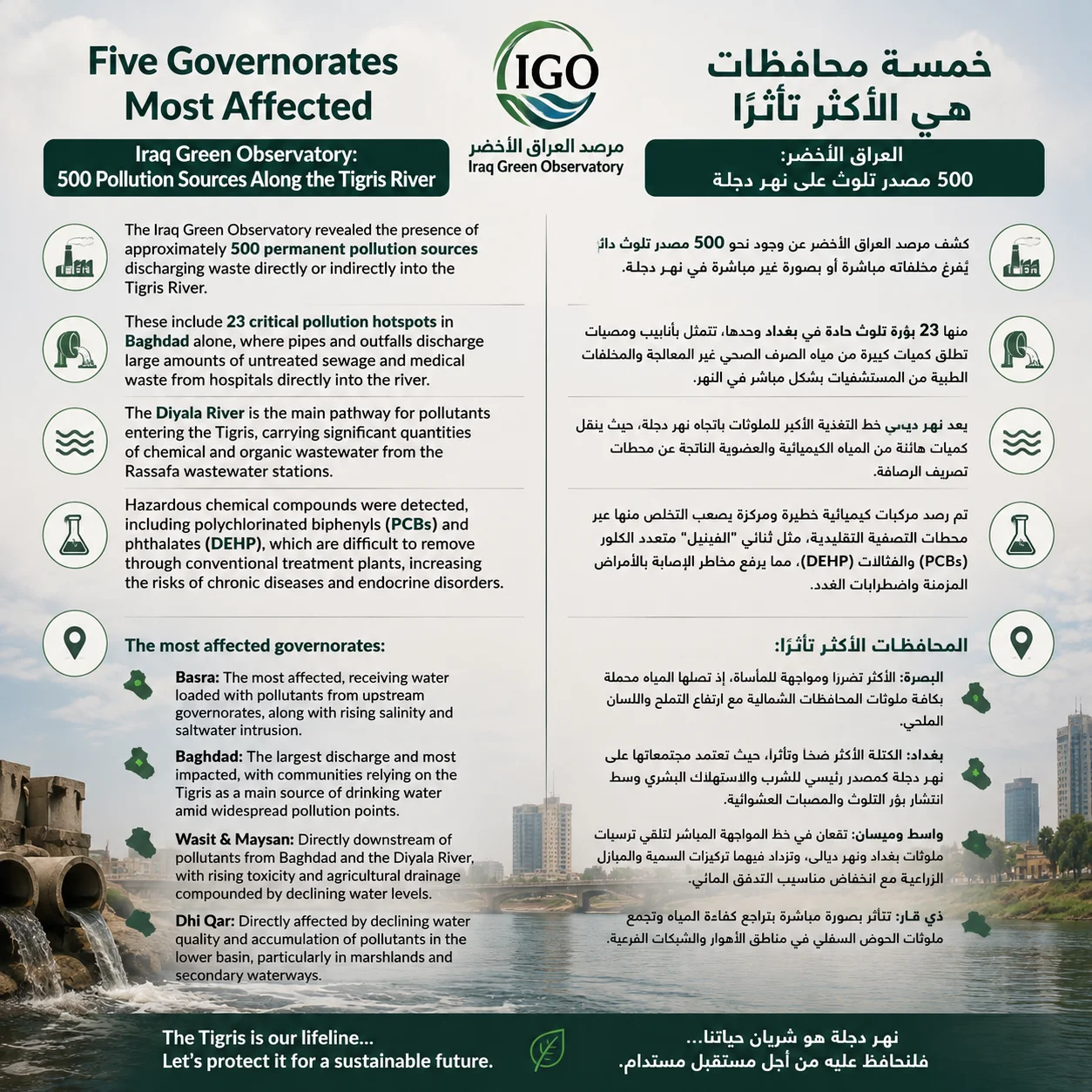
The Iraq Green Observatory revealed the presence of approximately 500 pollution sources along the Tigris River, confirming that five governorates are the most affected by this pollution.
The Observatory stated that the severe environmental violations affecting the Tigris River, which is considered the country’s main lifeline, continue as a result of industrial and medical pollutants, as well as untreated wastewater.
The Observatory added that its assessments and field monitoring indicate that the water crisis is no longer limited to reduced water releases, but has evolved into a toxic environmental crisis threatening the health of millions of citizens, as well as the country’s water and food security.
The Observatory noted the presence of more than 500 permanent pollution sources that discharge waste directly or indirectly into the river. These include 23 critical pollution hotspots in Baghdad alone, consisting of pipes and outfalls that discharge large quantities of untreated sewage and medical waste from hospitals directly into the river.
It also warned that the Diyala River represents the largest pathway for pollutants entering the Tigris, carrying significant quantities of chemical and organic wastewater originating from the Rassafa wastewater discharge stations.
The Observatory reported detecting concentrated hazardous chemical compounds that are difficult to remove through conventional treatment plants, including polychlorinated biphenyls (PCBs) and phthalates (DEHP), increasing the risks of chronic diseases and endocrine disorders.
Regarding the governorates most affected by this pollution, the Observatory warned that Basra is the most severely affected and faces the greatest environmental challenges, as it receives water carrying pollutants from upstream governorates, in addition to increasing salinity and the advancing saltwater intrusion. This contributes to the deterioration of raw water quality and increases the risks associated with contamination and impurities.
Baghdad is also among the most affected areas due to the large volume of wastewater discharged into the river. Its communities depend heavily on the Tigris as a major source of water for drinking and human consumption, amid the presence of numerous pollution hotspots and unauthorized discharge points.
Wasit and Maysan lie directly downstream of pollution originating from Baghdad and the Diyala River. Pollution concentrations and agricultural drainage are exacerbated by declining water levels and reduced river flows.
Dhi Qar is also directly affected by deteriorating water quality and the accumulation of pollutants in the lower basin, particularly across the marshlands and interconnected secondary waterways.