Iraq Green Observatory: Iraq Will Not Be Able to Fully Benefit from Water Flows Entering the Euphrates from Syria
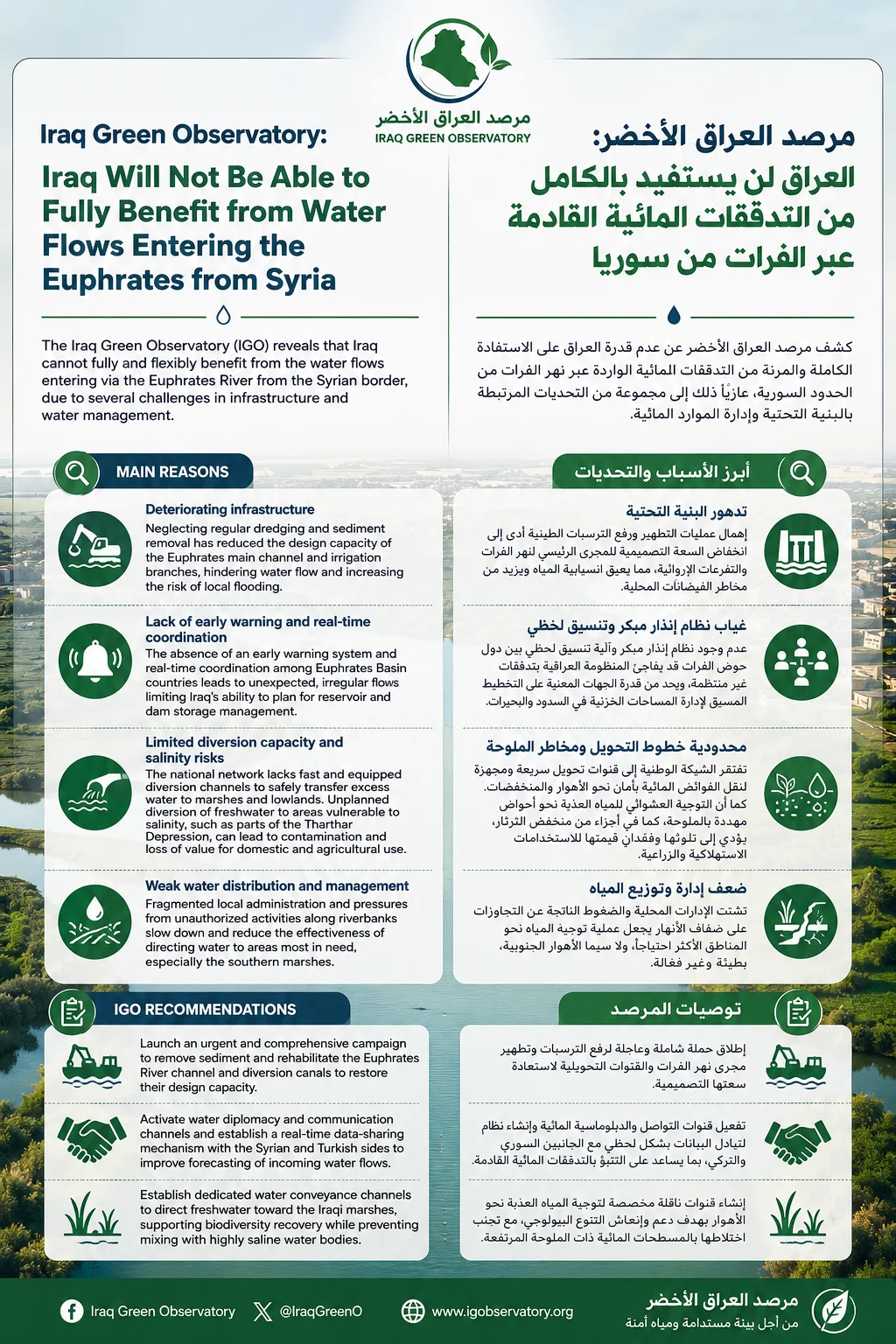
The Iraq Green Observatory (IGO) has warned that Iraq may not be able to fully and flexibly utilize the water flows entering the country through the Euphrates River from the Syrian border, citing a number of challenges related to water infrastructure and resource management.
According to the Observatory, deteriorating infrastructure and the lack of regular dredging and sediment removalhave reduced the design capacity of the main Euphrates channel and irrigation branches. This restricts water flow and may prevent the river system from safely handling higher volumes of water without creating localized flood risks.
The Observatory also highlighted the absence of an effective early-warning system and real-time coordination mechanism among Euphrates Basin countries. This could expose Iraq's water management system to unexpected and irregular inflows, limiting the ability of authorities to plan in advance for the management of available storage capacity in dams and reservoirs.
Another major challenge, according to IGO, is the limited capacity of diversion channels and the risk of salinity. Iraq's national water network lacks sufficiently rapid and well-equipped diversion channels capable of safely transferring excess water toward the marshes and low-lying areas. The indiscriminate diversion of freshwater toward areas vulnerable to salinity, including parts of the Tharthar Depression, could also contaminate these water bodies and reduce their value for domestic and agricultural use.
The Observatory further pointed to weaknesses in water distribution and management, including fragmented local administration and pressure resulting from unauthorized activities along riverbanks. These factors can make the process of directing water toward areas most in need, particularly the southern marshes, slow and ineffective.
IGO Recommendations
The Iraq Green Observatory recommended:
• Launching an urgent and comprehensive campaign to remove sediment and rehabilitate the Euphrates River channel and diversion canals in order to restore their design capacity.
• Activating water diplomacy and communication channels and establishing a real-time data-sharing mechanism with the Syrian and Turkish sides to improve forecasting of incoming water flows.
• Establishing dedicated water conveyance channels to direct freshwater toward the Iraqi marshes, supporting the recovery of biodiversity while preventing freshwater from mixing with highly saline water bodies.