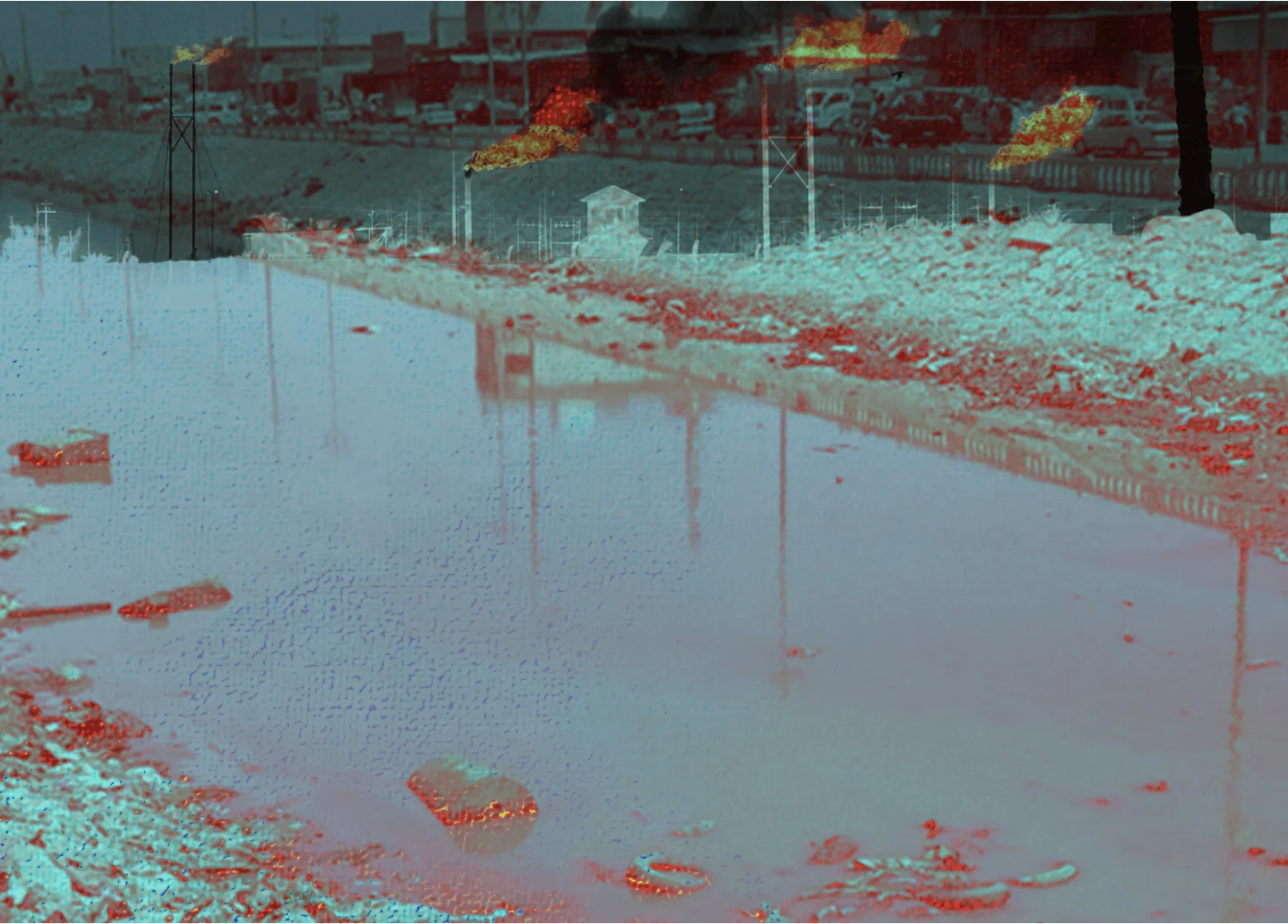
Iraq is facing mounting economic, political, and social challenges driven by the escalating impacts of the climate crisis. The country is enduring prolonged droughts and unprecedented rises in temperature, forcing more than 130,000 people to abandon their homes and livelihoods over the past seven years in southern Iraq alone. According to national and international assessments, Iraq risks losing half of its water resources by 2030. Meanwhile, provinces such as Basra have witnessed an alarming increase in cancer cases, largely attributed to the devastating environmental consequences of the oil industry.
Despite these realities, a striking gap remains between the magnitude of these challenges and Iraq's legislative and legal framework, which is still largely confined to the Environmental Protection and Improvement Law of 2009. This stands in stark contrast to the growing international commitment to addressing climate change through comprehensive legislation, stringent regulations, and climate-focused educational policies.
Article 27 of Iraq's Environmental Protection and Improvement Law (2009) stipulates the protection and enhancement of the environment through the prevention, mitigation, and remediation of environmental damage, while safeguarding public health, natural resources, biodiversity, and the country's natural and cultural heritage. Yet the law makes no explicit reference to the impacts of climate change, despite Iraq's prolonged climate crisis, characterised by water scarcity, drought, desertification, extreme heat, and climate-induced displacement.
Since the law was enacted in 2009, neither the legislative nor the executive authorities have taken meaningful steps to update it. This reflects a failure to respond adequately to emerging environmental challenges and to the escalating crises threatening public health, natural resources, and biodiversity across the country.
The Environmental Protection and Improvement Law was adopted in 2009, six years after the establishment of the Ministry of Environment as part of the broader restructuring of Iraq's governmental institutions following the fall of the former regime in 2003. At the time, the Ministry was tasked with developing environmental policies, enforcing environmental regulations, and monitoring pollution. However, it was still a newly established institution, with limited institutional capacity and personnel who lacked sufficient expertise in environmental governance.
Environmental issues themselves were relatively new to Iraqi lawmakers, who had not previously dealt with such matters in legislation. This was compounded by the exceptionally turbulent period between 2003 and 2009, during which Iraq faced sectarian conflict, severe security challenges, and profound economic and humanitarian crises that understandably dominated the country's political agenda.
Global Legislative Efforts to Combat Climate Change
Around the world, governments have introduced laws, regulations, and international agreements aimed at addressing climate change and reducing its impacts.
Among the most significant international initiatives is the Paris Agreement, adopted by nearly 190 countries in 2015 to reduce greenhouse gas emissions, alongside the Kyoto Protocol and the United Nations Framework Convention on Climate Change (UNFCCC).
At the national level, many countries have enacted comprehensive climate legislation. In the United States, the Inflation Reduction Act of 2022 provides unprecedented incentives for green investments and clean energy projects. The United Kingdom introduced the Climate Change Act 2008, the world's first legally binding framework requiring an 80% reduction in greenhouse gas emissions by 2050 compared with 1990 levels. The Act has since been updated to align with the country's net-zero emissions commitments.
Similarly, the European Climate Law, adopted in 2021, is widely regarded as one of the world's most ambitious climate laws. It legally commits the European Union to achieving climate neutrality by 2050 while reducing greenhouse gas emissions by 55% by 2030, compared with 1990 levels. The legislation is supported by robust monitoring mechanisms and substantial investments in renewable and clean energy.
Germany also stands among the global leaders in environmental legislation. The country has established a comprehensive legal framework comprising more than 30 laws and regulations governing environmental protection and climate action across multiple sectors.
Where Does Iraq Stand in Relation to Global Progress?
Discussing the best international practices that Iraq could adopt in developing climate legislation and identifying the sectors most vulnerable to climate change, Dr Khadija Al-Jabri, an expert in agriculture and climate, told Al-Alam Al-Jadeed, which is publishing this report exclusively, that:
"The agricultural sector is the most severely affected by climate change, primarily because of increasingly unpredictable weather patterns that directly influence crop production."
Al-Jabri explained that rising temperatures and declining seasonal rainfall have dramatically reduced Iraq's cultivable land, with agricultural areas shrinking by 17% to 50%. Water resources rank as the second most affected sector, as water scarcity has become a critical issue, particularly in southern Iraq. In addition, biodiversity across the country has suffered extensive damage.
Addressing efforts to confront global warming and the role of national legislation in tackling its consequences, Al-Jabri added:
"Incorporating climate change provisions into Iraq's Environmental Protection Law would significantly strengthen environmental sustainability by establishing a robust regulatory framework for mitigation efforts, promoting adaptation strategies, enhancing institutional capacity, creating economic opportunities, and directly addressing the country's existing environmental challenges."
She stressed that by prioritising these measures today, Iraq could move towards a more sustainable future that balances environmental protection with social and economic development.
Meanwhile, Dr Ramadan Hamza, an expert in water strategies and policy, emphasised the importance of Iraq's commitment to international agreements.
He stated that:
"Active participation in international climate agreements, including the Paris Agreement and conventions related to biodiversity, would strengthen Iraq's commitment to addressing climate change and reducing greenhouse gas emissions."
Speaking exclusively to Al-Alam Al-Jadeed, Hamza also highlighted the importance of domestic legislation, noting that:
"Existing national laws, including the current Environmental Protection Law, can contribute—albeit indirectly—to obliging both public institutions and society to address the impacts of climate change."
He explained that enforcing stricter environmental legislation at the national level would reinforce both climate adaptation and mitigation efforts. Such laws could establish clear environmental standards for managing natural resources and development projects while introducing penalties and legal obligations for environmental violations, thereby improving compliance and strengthening the rule of law.
New Climate Legislation in Iraq: From Borrowing Models to Building Innovation
For his part, Ibrahim Mahdi Al-Sudani, an academic and member of Iraq's permanent climate negotiations delegation, recounted Iraq's journey toward developing new environmental legislation.
He explained:
"When Iraq first drafted its Environmental Protection Law, it lacked specialists in environmental and climate issues. As a result, we drew heavily on the experiences of neighbouring countries such as Jordan and Saudi Arabia. We studied their legislation and adapted many of its provisions to develop a national law that reflected the regional context at the time."
Al-Sudani noted that Iraq's genuine engagement with climate policy began only after the Paris Agreement was adopted in 2015.
"Following the agreement, Iraq established the National Centre for Climate Change within the Ministry of Environment. Its work began alongside the implementation of the Paris Agreement and eventually led to the establishment of the Higher National Committee for Climate Change, which brought together representatives from most Iraqi ministries."
According to Al-Sudani, after the outbreak of the COVID-19 pandemic in 2020, discussions intensified over either amending the existing Environmental Protection Law or introducing entirely new legislation capable of providing the legal framework needed to confront climate-related crises and finance climate adaptation and mitigation projects aimed at reducing greenhouse gas emissions.
He explained that these efforts resulted in the formation of a specialised committee composed of legal experts, representatives from several government departments, and the Directorate of Climate Change. The committee was tasked with developing a comprehensive vision for revising Iraq's current environmental legislation under the supervision of Minister of Environment Nizar Amidi.
Al-Sudani revealed that the proposed amendments would affect more than half of the existing law, effectively transforming it into an entirely new piece of legislation.
"We are currently awaiting the final draft before it is submitted to Parliament for a vote next year."
He added that the draft law would also include legislation establishing the Carbon Economics Company, an executive body responsible for environmental restoration projects, carbon credit trading, emissions reduction initiatives, and other programmes designed to support the Ministry of Environment and expand Iraq's climate action efforts.
The Legal Perspective: Can Iraq's Existing Laws Meet Today's Climate Challenges?
Legal consultant Hussam Raad Al-Bahadli argues that the first step should be a comprehensive review of Article 27 of the Environmental Protection and Improvement Law of 2009 to determine whether it is sufficient to address today's climate challenges.
Speaking to Al-Alam Al-Jadeed, Al-Bahadli said:
"A thorough legal assessment of Article 27 is essential to evaluate its effectiveness in confronting contemporary climate challenges. However, this must also include a review of the existing secondary legislation and the broader objectives of the law to ensure it adequately incorporates measures to combat climate change and promote the use of renewable energy."
He added that Iraq's legal framework has become more adaptable than it was in the past and is now more receptive to new legislation.
"The real challenge lies in securing government support for such legislation and assessing its potential economic and social impacts. No country can introduce laws that significantly undermine society or its economy."
Iraq at a Crossroads
For his part, Omar Abdul Latif, Executive Director of the Iraqi Green Observatory, warned that Iraq is rapidly approaching a critical tipping point.
He said:
"In the absence of decisive climate legislation, Iraq stands on the brink of an unforgiving environmental catastrophe. Desertification continues to consume our land, the water crisis is tightening its grip on agriculture, and recurring droughts are devastating the livelihoods of farmers and rural communities, forcing many to abandon their villages and move to cities already overwhelmed by displaced populations."
Abdul Latif added that the consequences extend far beyond the environment.
"As temperatures continue to rise and air pollution worsens, diseases are spreading at an alarming rate, placing even greater pressure on an already fragile healthcare system. Iraq's economy has begun to erode under the weight of climate change, suffering losses it can scarcely afford. Without decisive action, the impacts of climate change could push even more Iraqis into poverty and unemployment."
He concluded with a stark warning:
"Iraq now stands at a defining crossroads. It must either move swiftly to adopt comprehensive climate legislation capable of steering the country away from this increasingly bleak future, or risk becoming trapped in an endless cycle of interconnected crises that will suffocate every hope for sustainable development and future prosperity."
Conclusion
The climate crisis is no longer a distant environmental concern for Iraq—it is a multidimensional challenge with profound implications for the country's economy, public health, food security, water resources, and social stability. While many nations have responded by modernising their legal frameworks and embedding climate action into national policy, Iraq's environmental legislation has remained largely unchanged for more than fifteen years.
Although plans are underway to introduce a new climate-oriented legal framework, experts agree that time is of the essence. Strengthening environmental governance, aligning domestic legislation with international climate commitments, and establishing effective mechanisms for adaptation, mitigation, and emissions reduction will be essential if Iraq is to build resilience against the accelerating impacts of climate change.
For Iraq, the question is no longer whether climate legislation is necessary, but whether it can be enacted before the country's environmental challenges become irreversible.