raq Green Observatory (IGO) : “Slow Death” Threatens Iraqis, While Solutions Could Cost Billions of Dollars
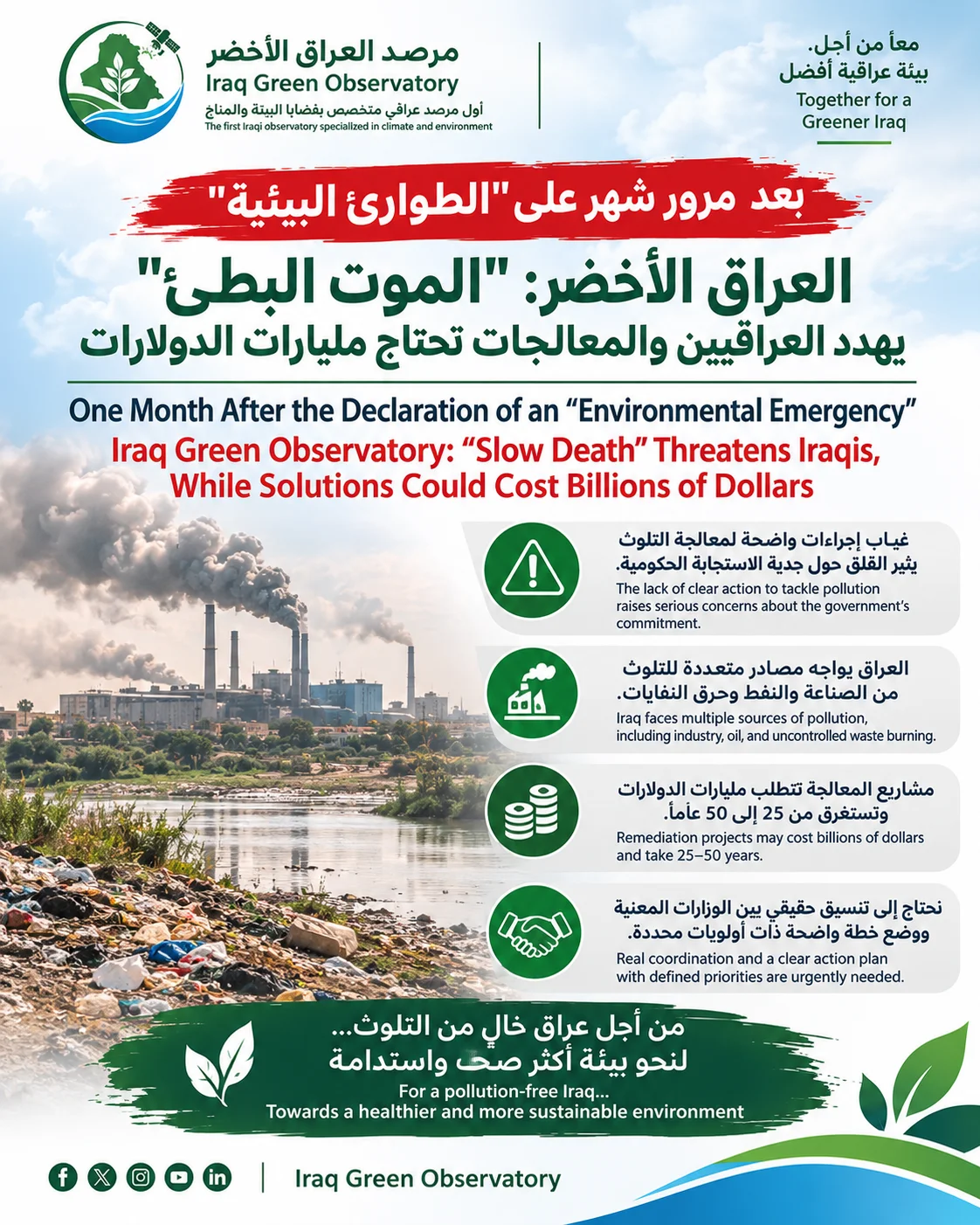
The Iraq Green Observatory has expressed concern over the absence of clear and tangible government action to address major pollution hotspots across Iraq, despite more than a month having passed since the Council of Representatives declared an environmental state of emergency.
The Observatory stated that the parliamentary decision, which aimed to put an end to the “slow death” threatening Iraqis and establish a specialized committee to address the crisis, was expected to mark the beginning of serious action to halt the country’s worsening environmental deterioration.
It added that the passage of this period without the announcement of clear field measures or tangible results in tackling pollution sources raises serious questions about the government's commitment to responding to the crisis and translating the emergency declaration into practical measures on the ground.
The Observatory explained that Iraq is not facing a single environmental problem but rather multiple sources of pollution, including emissions from industrial and oil-related activities, uncontrolled waste burning, the discharge of contaminated water into rivers and other water bodies, as well as environmental violations that require continuous monitoring and deterrent measures.
The Observatory further noted that officials from the relevant ministries and government agencies had confirmed that the committee had recommended both short-term and long-term projects to address environmental damage. Short-term projects could be implemented within one year, while long-term projects could take between 25 and 50 years. These initiatives would also require substantial financial resources, potentially amounting to billions of dollars, at a time when Iraq is already facing an economic crisis.
The Observatory stressed that the declaration of an environmental emergency should have been followed by the public identification of priority pollution hotspots, field assessments to determine the extent of environmental damage, and the establishment of a clear timeline for addressing the most hazardous sites. It should also have included obligating entities responsible for pollution to implement corrective measures and holding violators accountable.
It further emphasized that tackling pollution cannot be limited to media statements or periodic meetings. Instead, it requires effective coordination between the Ministry of Environment and other relevant government institutions, particularly those responsible for industry, oil, water resources, municipalities, and the Baghdad Municipality. Such coordination is essential to addressing pollution at its source rather than merely dealing with its consequences.
Finally, the Iraq Green Observatory called on the Ministry of Environment to publicly disclose the results of the measures taken since the declaration of the environmental emergency, clarify which locations have been covered by inspection campaigns, report the number of violations recorded and the entities held accountable, and publish a transparent action plan outlining remediation priorities, implementation deadlines, and measurable performance indicators.